Chairman of the Hoard.
Artist Nemo Gould, a.k.a. nemomatic, is a compulsive collector of things and a maker of all sorts: kinetic sculpture built from what the world threw away, made in Oakland, California.
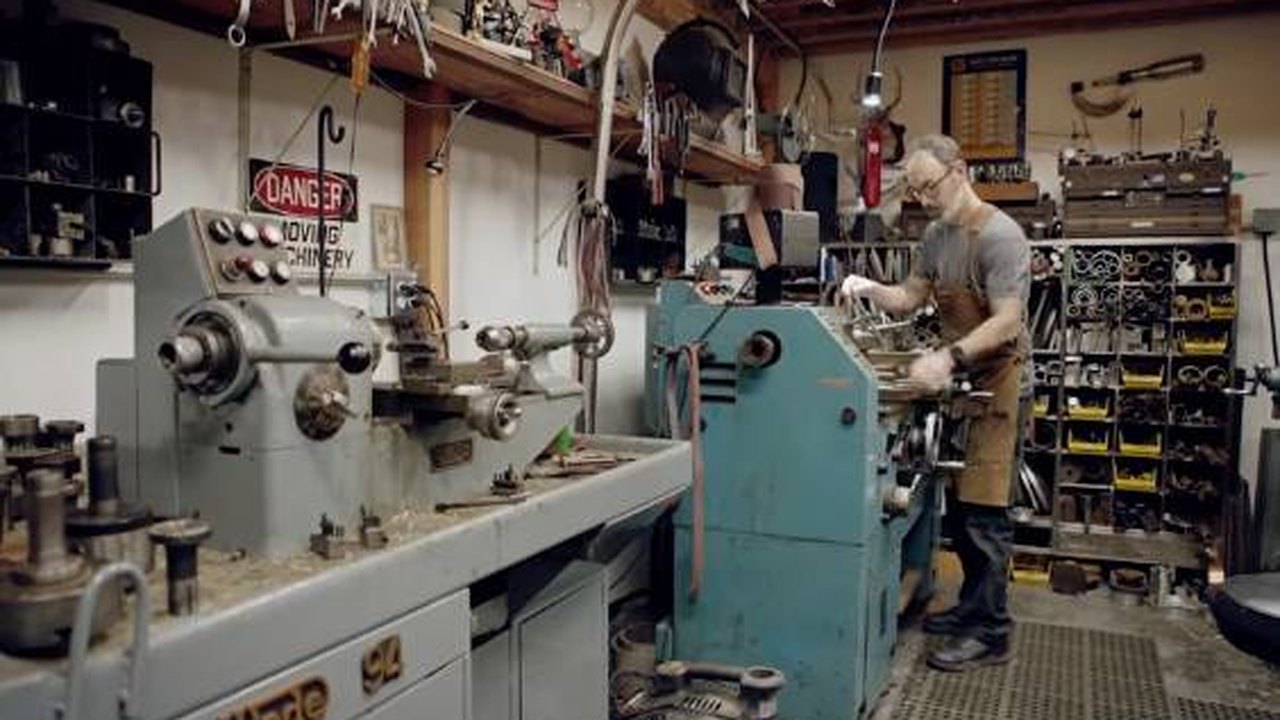
Art is a process of discovery through materials.
For Nemo Gould, this discovery is not found on a blank canvas or within a block of marble, but from a hoard of junk. It starts with a hunt of conservation, sifting through trash, prowling flea markets, and appraising the offerings from well intentioned enablers of his “high functioning madness.” At this stage there is no clear vision, just the itch of potential in objects deemed useless by society—the more hopeless the case the better.
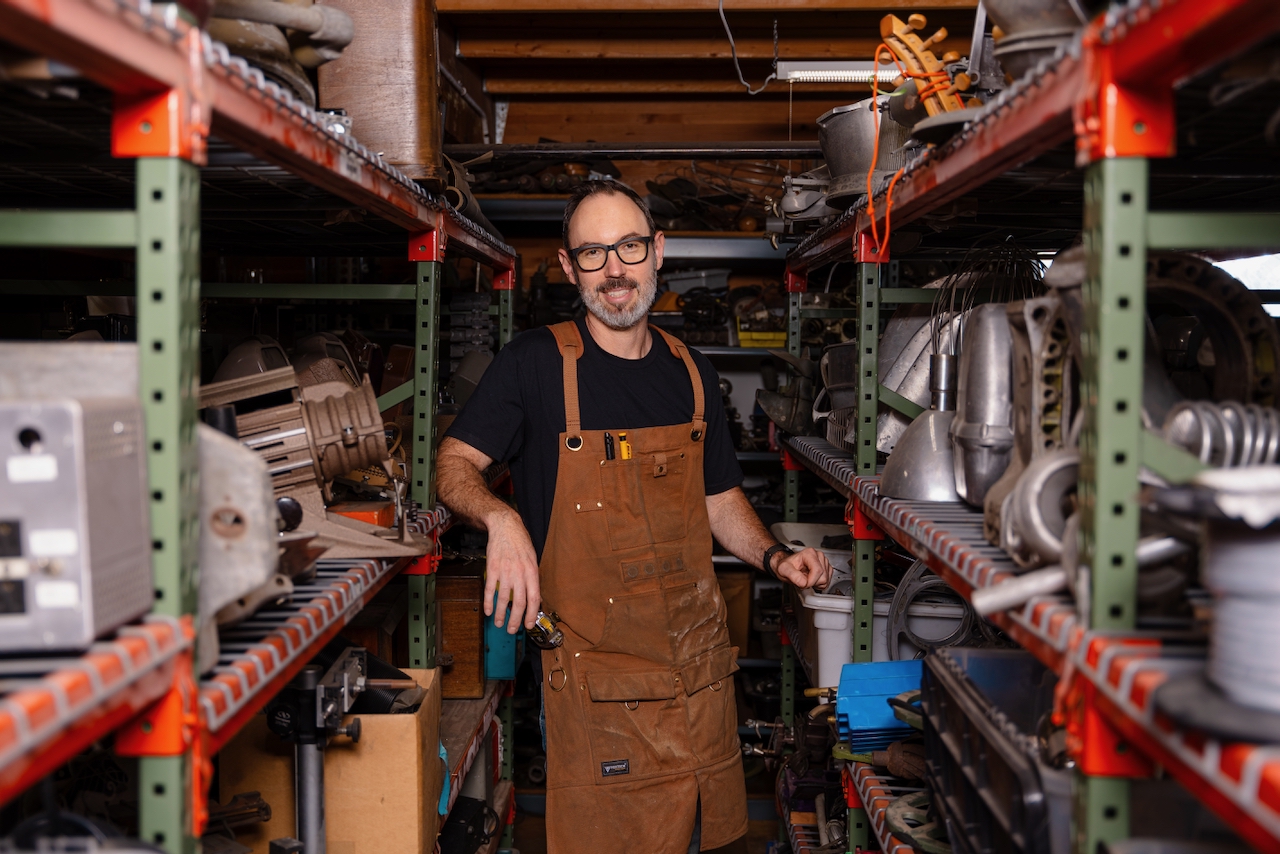
Nemo collects by a guiding principle: “If you can’t find it, you don’t own it.” This means that the self-titled “Chairman of the Hoard” must be a strict librarian, keeping his Oakland studio’s collection of potential from falling into a hovel of forgotten parts. Crucial to this curation is separating an object from its original purpose. Instrument parts no longer exist to make music, they are knobs, wire, and bits of wood dispersed accordingly. It is through this decontextualized organization that the transformation process begins.
Born in 1975 to artist parents in Minneapolis, Minnesota, Nemo was destined for a creative life. Early explorations in animation show that there was always an interest in kinetic art. However, Nemo also went down the road of traditional fine arts, earning a BFA from the Kansas City Art Institute in 1998 and an MFA in sculpture from U.C. Berkeley in 2000. Tinkering and bricolage became a creative escape from the discipline of fine art, the skills of which were added to the shelf, saved for a new purpose. Among this collection of skills are manual machining, various welding techniques, and advanced trial-and-error.
The real art of Nemo’s work is in matchmaking. Items filed away in his refuse refuge eventually make their way to his workbench, where they may find a permanent home together in a work of art. These relationships are made with one well trained eye for aesthetics, and one carefully preserved eye for child-like whimsy. In his own words, Nemo “…[takes] silly very seriously.” The headstock of a violin gets stop-motion arms and clock gear guts; the barrel of a rifle is replaced with a trumpet horn with its business end pointed back at the operator; an antique film rewinder with a saw handle joins with six ball-peen hammers to make a rotary hammer of dubious utility. These are Frankenstein’s monsters of forgotten items given life through interactive mechanisms and anthropomorphized forms, a small act of rebellion against our disposable world.
Written by Kelsey Watson · Plumier Foundation
How a piece happens
The vast majority of the work on this site is the product of found and salvaged materials. Each sculpture takes a long time to build, and nearly as long is spent searching for “raw” material: scrap-metal yards, second-hand stores and dumpsters. All of it is brought to the studio, cleaned, stripped of anything unusable and sorted for later. The system of organisation is a key to the work. To all you fellow hoarders out there: if you don’t know what’s buried under that pile in the corner, it’s just garbage.
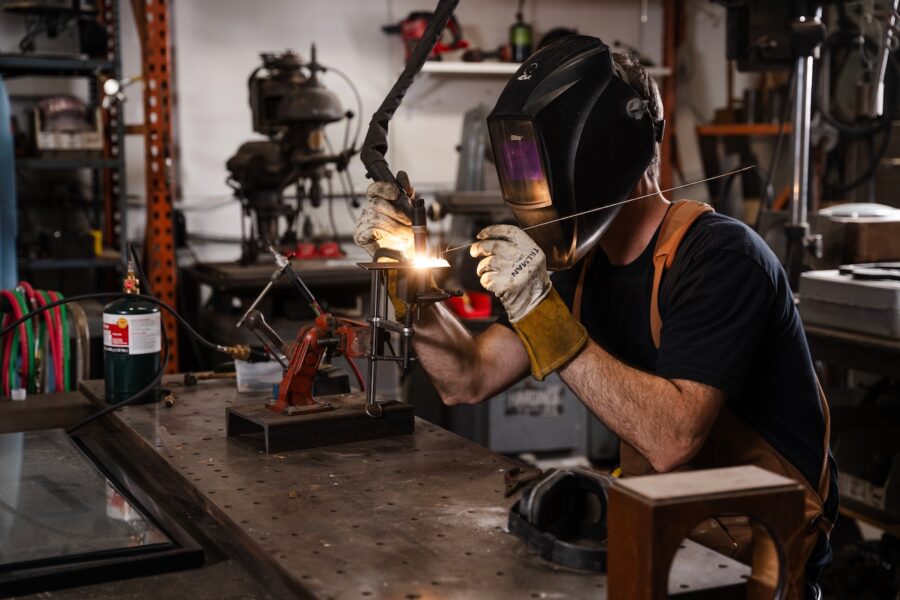
The range of objects has forced a range of skills not often associated with art-making. The abundance of aluminium, for example: those pieces are formed by TIG-welding many found elements together and sanding out the seams. Contrary to how they may look, no raw metal is cast. Wood is stripped of old stains and varnish and resurfaced; holes are filled, cracks mended, missing parts remade from other scraps. The urge to make more engaging sculpture led to electronics, wiring, mechanical engineering and machining — and once again, elements of consumer devices are salvaged, repaired and given a new job.



Find
Scrap yards, thrift stores, dumpsters. The right typewriter case can take a year to turn up.
Sort
Everything cleaned, stripped and shelved by type in the Oakland studio. The system is the work.
Weld
Found aluminum TIG-welded and sanded seamless. No casting — every curve was once something else.
Wire
Motors, panel meters, LEDs, hand-crank generators. Salvaged, repaired, given a new job.
Animate
A crank, a button, a motion sensor. It isn’t finished until it does something when you touch it.
Selected shows & press
Have one built around your story.
Commissions start with a conversation. Originals in the studio ship crated from Oakland.
All images © Nemo Gould. Credit the artist and link back when reposting; no commercial use without written permission — email nemo@nemogould.com.